
H is for… Heroes
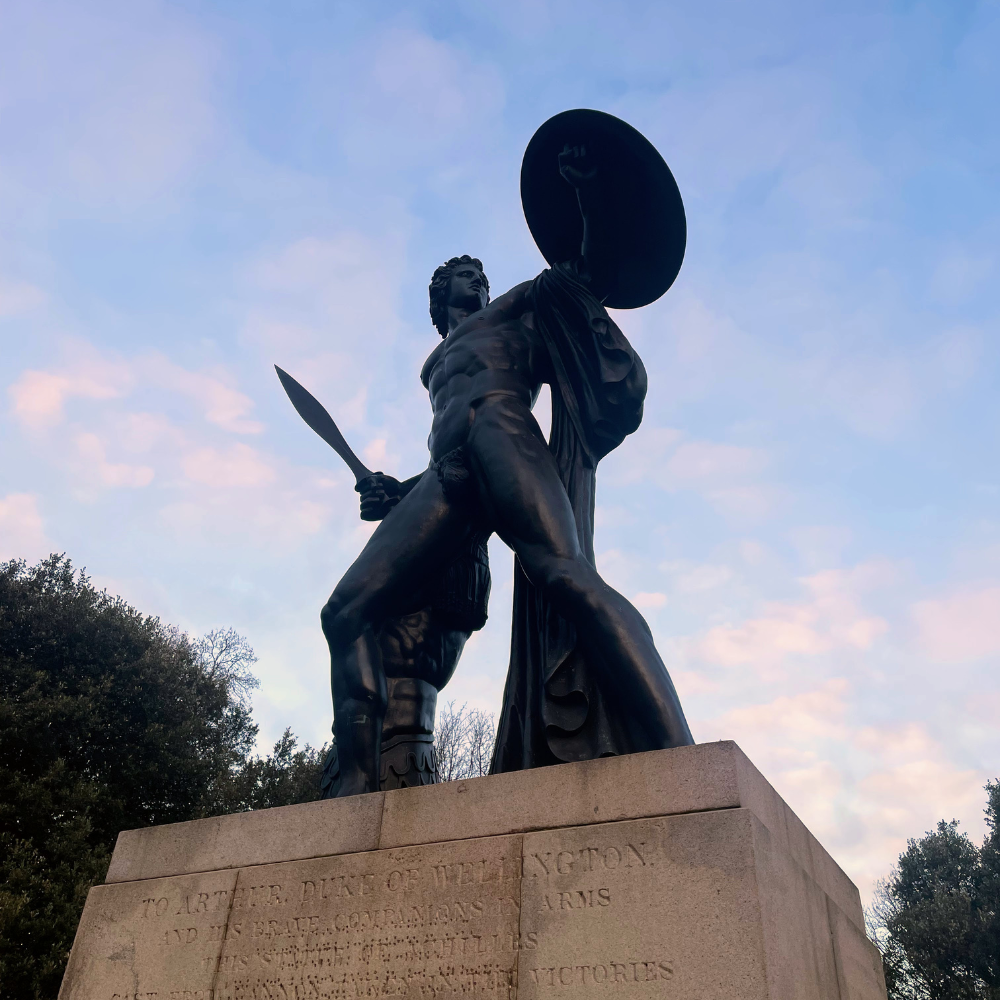
Greek hero Achilles standing proud in Hyde Park
I spend most of my days talking about the incredible history of London and its inhabitants, often focusing on the ups and downs of royal history in the capital. Many of my favourite stories are about notorious villains such as Henry VIII or Charles I, kings with names blackened by their terrible deeds – but there are many heroes to be talked about too.
The word “hero” often conjures up an image of famous people of history, and there are certainly some heroes well-known to us all, such as wartime Prime Minister Winston Churchill, the ancient British queen Boudicca, or fabled characters like King Arthur and Robin Hood. However, many heroes are perhaps less known, and one of London’s most moving memorial celebrates some of them.
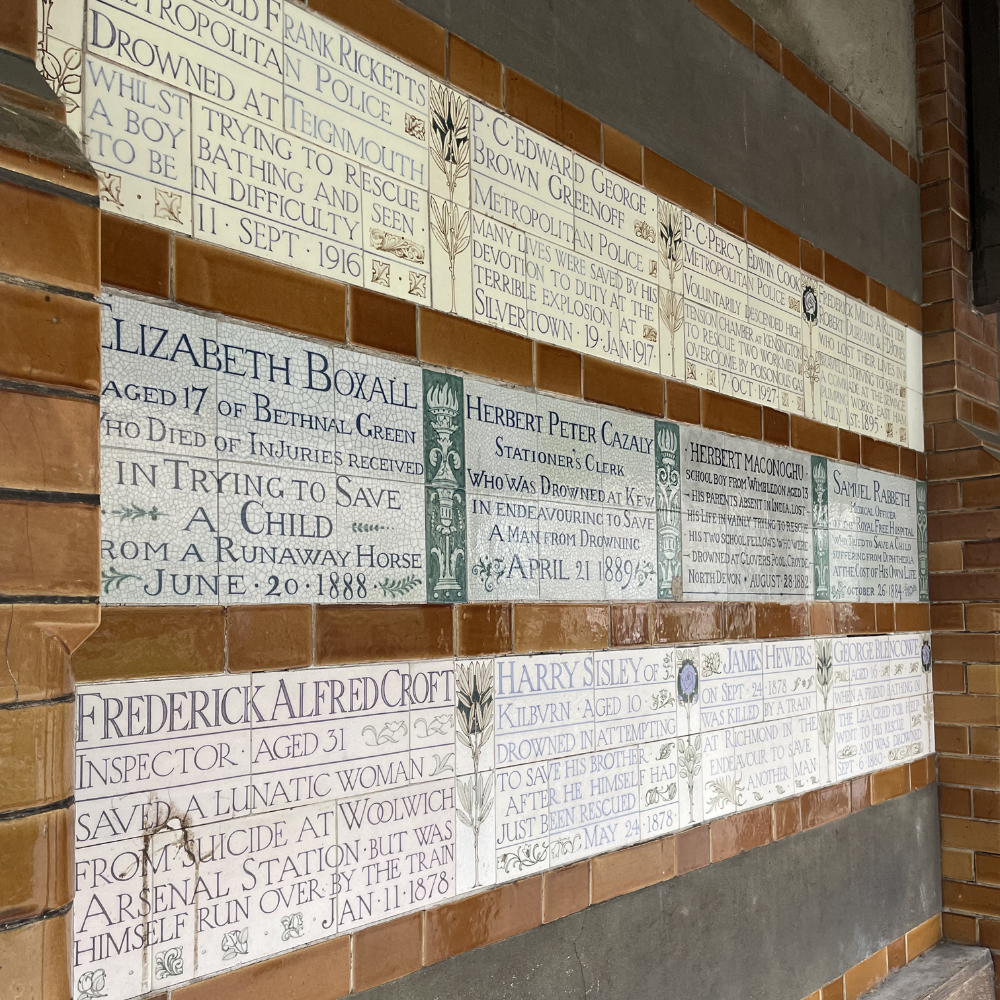
The plaques of Postman’s Park
Tucked away amongst the towering buildings of the City of London’s financial district lies Postman’s Park, an oasis of green set in an old churchyard. Set against a wall at its northwestern side you will find the Memorial to Heroic Self-Sacrifice. This touching monument commemorates 62 ordinary men, women, and children who gave their lives to save others.
The memorial was first proposed by the artist and designer George Frederic Watts in 1887, although work was not begun until 1898. The heroes’ names are depicted on beautifully handcrafted ceramic tiles, and detail the ways they lost their lives to save others’, who were often strangers to them. The acts of heroism include a train driver and fireman who saved their passengers by stopping a crashing train; a young governess who saved three children from a burning house; Henry James Bristow, just eight years old, who saved his little sister, again from fire; and Mary Rogers, who worked aboard a ferry and gave up her life belt to a passenger when the ship hit a reef off the Channel Islands. All of these heroes are from the late 19th and early 20th century, with one more recent tile added in 2009 to commemorate Leigh Pitt, who saved a boy from drowning in a canal in 2007.
Their stories are tragic, but this is one of my favourite heroes’ memorials in the city, as it commemorates people who, in living their regular lives, showed extraordinary courage, and yet whose bravery might otherwise be all but forgotten.
Other ordinary people caught up in deadly events are of course the soldiers who defend our country in times of war. The First and Second World Wars involved immense numbers of citizens, many of whom died in foreign fields to preserve democracy, and we honour them in London with a memorial placed at the heart of the government district.
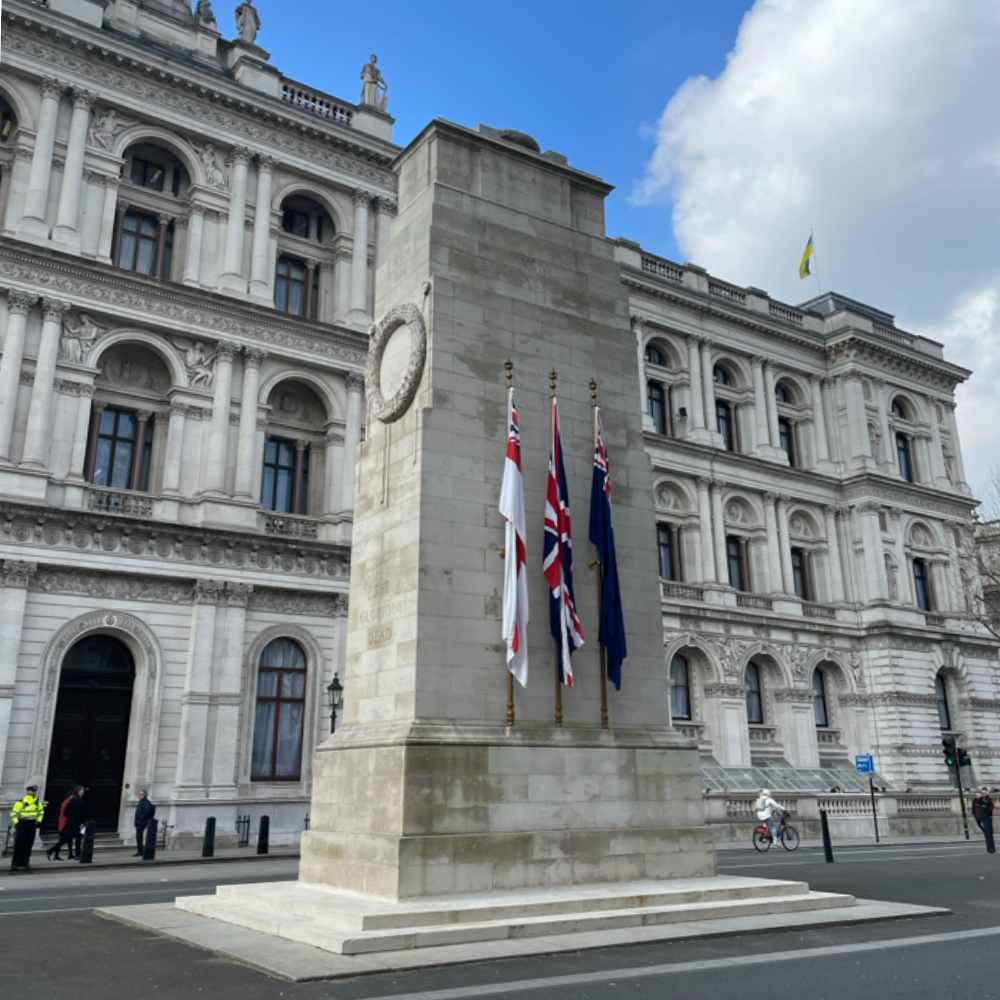
The Cenotaph
This monumental stone block stands in the middle of Whitehall, between the Ministry of Defence and the entrance to Downing Street. It is called the Cenotaph, which comes from the Greek, meaning “empty tomb”, and stands as a memorial to all those who lost their lives to war, in particular the almost 900,000 men who died during World War I.
It was unveiled on the 11th of November 1920 by King George V, and on the same day the Unknown Warrior was laid to rest in the nave of nearby Westminster Abbey. Together they remind us of all those who give their lives to protect the United Kingdom in times of war, and particularly those who remain unidentified, such as the man who lies in the tomb in Westminster.
While it was originally a memorial solely for those lost in World War I, it was later rededicated to include those who died in World War II, and now stands for all British and Commonwealth soldiers lost in conflicts around the world. Every year on the Sunday closest to 11th of November – Remembrance Day in the UK – political and military leaders gather to lay wreaths of poppies at the foot of the stone slab, and to pay their respects.
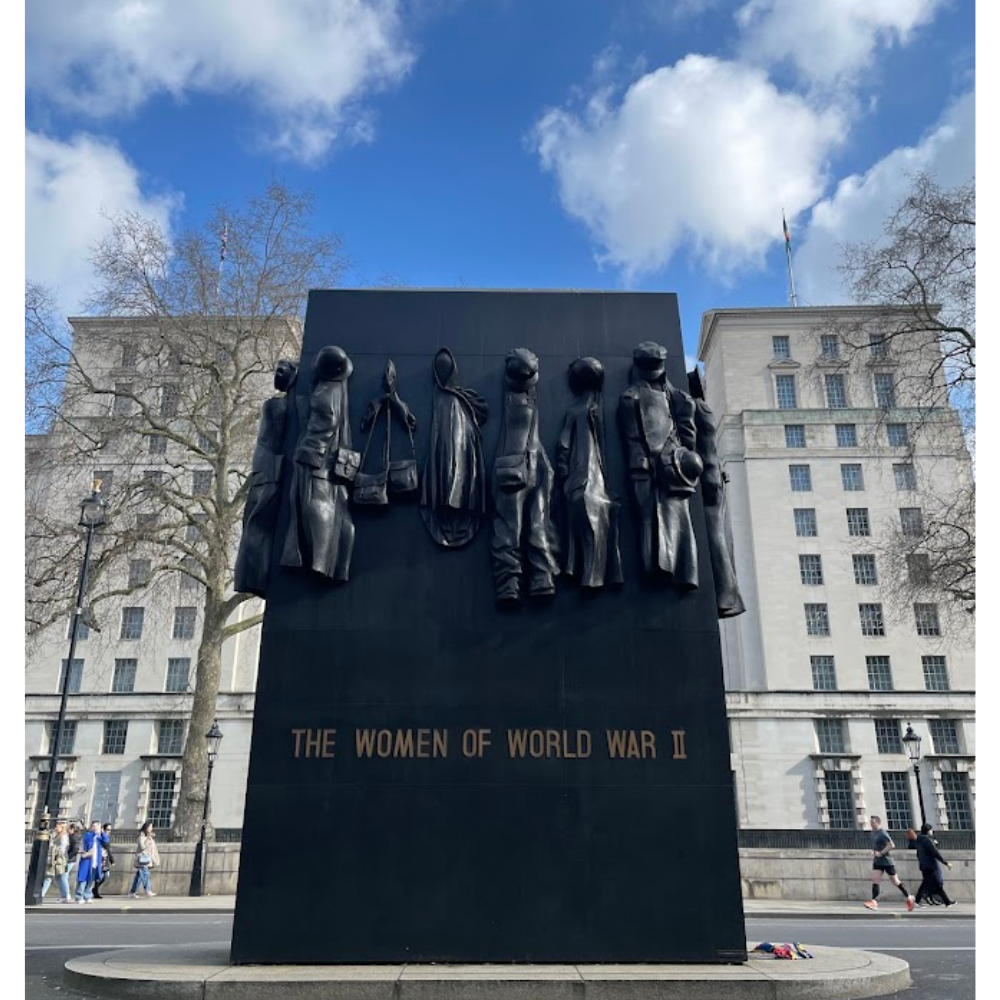
The Women of World War II Memorial
A little further along Whitehall stands one of the capital’s newest war memorials – that to the women of World War II. Although in the 1930s and 40s, women could not serve as combatants in the armed forces, many stepped up to fulfil vital roles in the war effort and to keep industry running while so many of the nation’s men served in the war.
This memorial was unveiled in 2005 by Queen Elizabeth II, who herself had driven an ambulance during the Second World War. Sculpted in cast bronze, its design shows 17 sets of clothing seemingly hung on hooks, representing the many roles taken on by women during the war effort. These include the trademark headscarf of “Land Girls” who worked farms to keep the country fed in a time of food rationing, the uniform of the Women’s Royal Naval Service, known as “Wrens”, who performed roles in all parts of the naval service except for active duty aboard warships, and the overalls and welding mask of those who worked in munitions factories and other heavy industry, jobs which would have been unthinkable for women of that era outside the extraordinary circumstances of war. Part of the poignancy of the memorial lies in the fact that we do not see these women, only their discarded work outfits, as at the end of the war, the jobs were handed back to men, and the women mostly returned to the more traditional roles available to them at the time. Women were not allowed to serve in combat with the armed forces until 1990 for the navy and 2018 for the army.
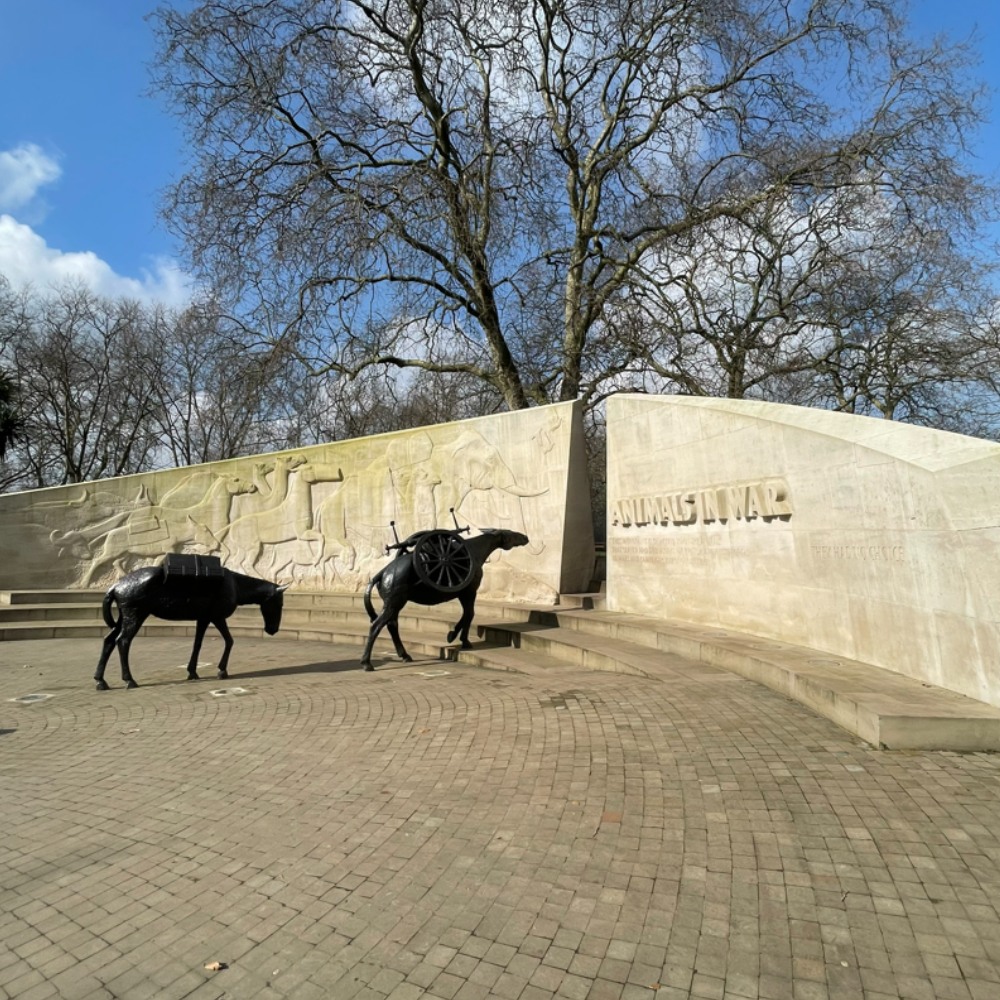
Animals in War Memorial
Shortly before the unveiling of the Women’s memorial, another was placed in Park Lane beside Hyde Park, honouring another group of irregular members of the war effort – the animals who have fought alongside men and women in every armed conflict going back thousands of years.
Called “Animals in War”, it was inspired by the book of the same name by British author Jilly Cooper. It features two huge slabs of Portland stone carved with reliefs of animals including horses, dogs, elephants, and pigeons. Trudging towards the gap between the slabs are two bronze pack mules, exhausted-looking and laden down with supplies; while on the other side of the opening, you find a joyous horse and a dog, free of tack and collar, prancing into the green space beyond.
Animals have always been essential parts of warfare, from Hannibal’s famous Elephants in the Alps, to the horses of World War I which inspired Michael Morpurgo’s poignant book “War Horse” and its play and movie adaptations, and the pigeons which carried vital intelligence messages during the Second World War, 32 of which were awarded a special medal of valour (the Dickin Medal) for their service – alongside 18 dogs, 3 horses, and even a ship’s cat. Winkie, Chips, Flying Dutchman, Simon the cat, and all our furred and feathered friends, we salute you!
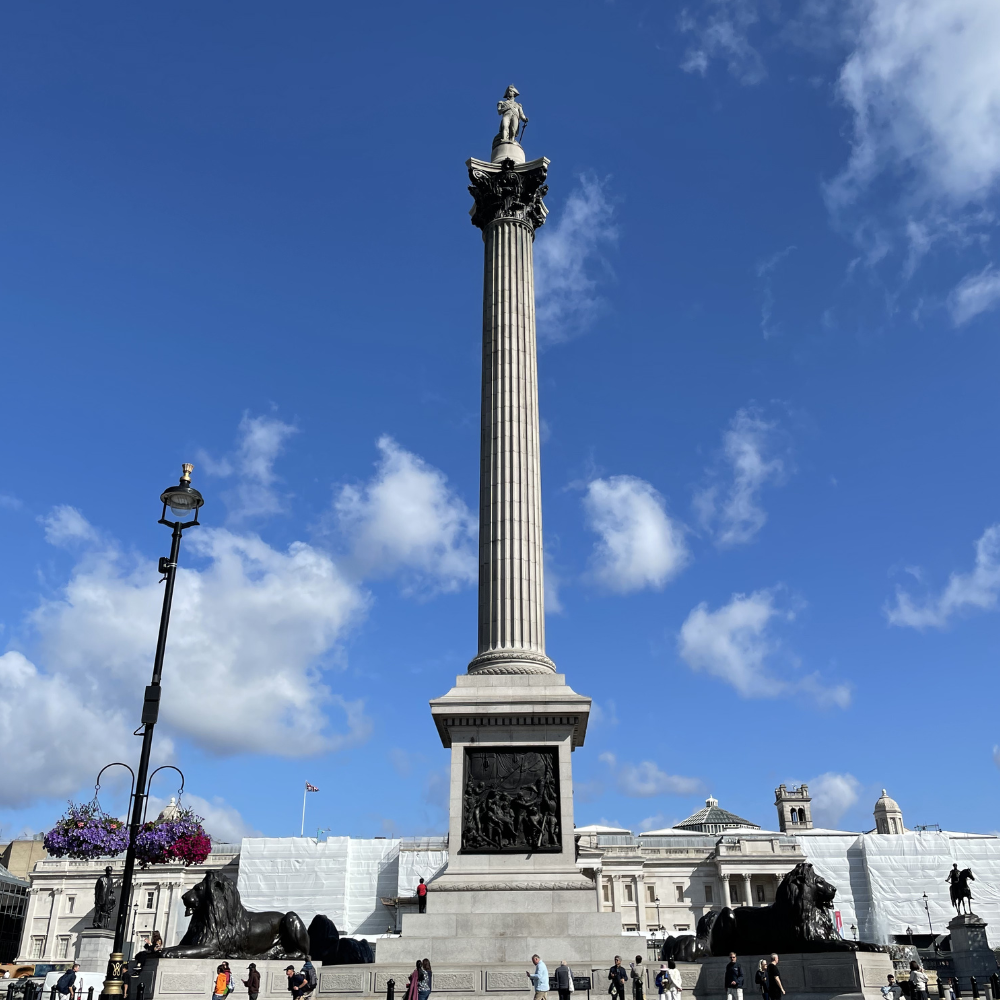
Nelson’s Column, standing tall in Trafalgar Square
One of Britain’s most famous military heroes is Vice-Admiral Horatio Nelson, whose statue stands atop Nelson’s Column in Trafalgar Square, at the very centre of London. Nelson first went to sea aged just 12 years old, and rose to command of the British fleet at the Battle of Trafalgar, of the south coast of Spain, on 21st October 1805, The battle saw Britain and her allies pitched against Napoleon and his. The fighting was brutal, and at one point Nelson’s friend and fellow officer John Scott was cut in half by cannon fire as he stood beside the admiral.
Nelson was always known for putting himself in the midst of fighting, even though as a commander he could have hung back and directed the action from afar; this had previously led him to lose his right arm and the sight in his right eye, and during Trafalgar it led to his ultimate sacrifice: shortly before the end of the battle, he was fatally shot by a rifleman in the rigging of a French ship, and succumbed to his wound just after victory was declared for Britain.
He was rewarded with a full state funeral at St Paul’s Cathedral on 9th January 1806, and is buried beneath a tomb once intended for King Henry VIII. His body was famously preserved for the journey back to Britain by being placed inside a barrel of rum, to preserve him for the long journey home.
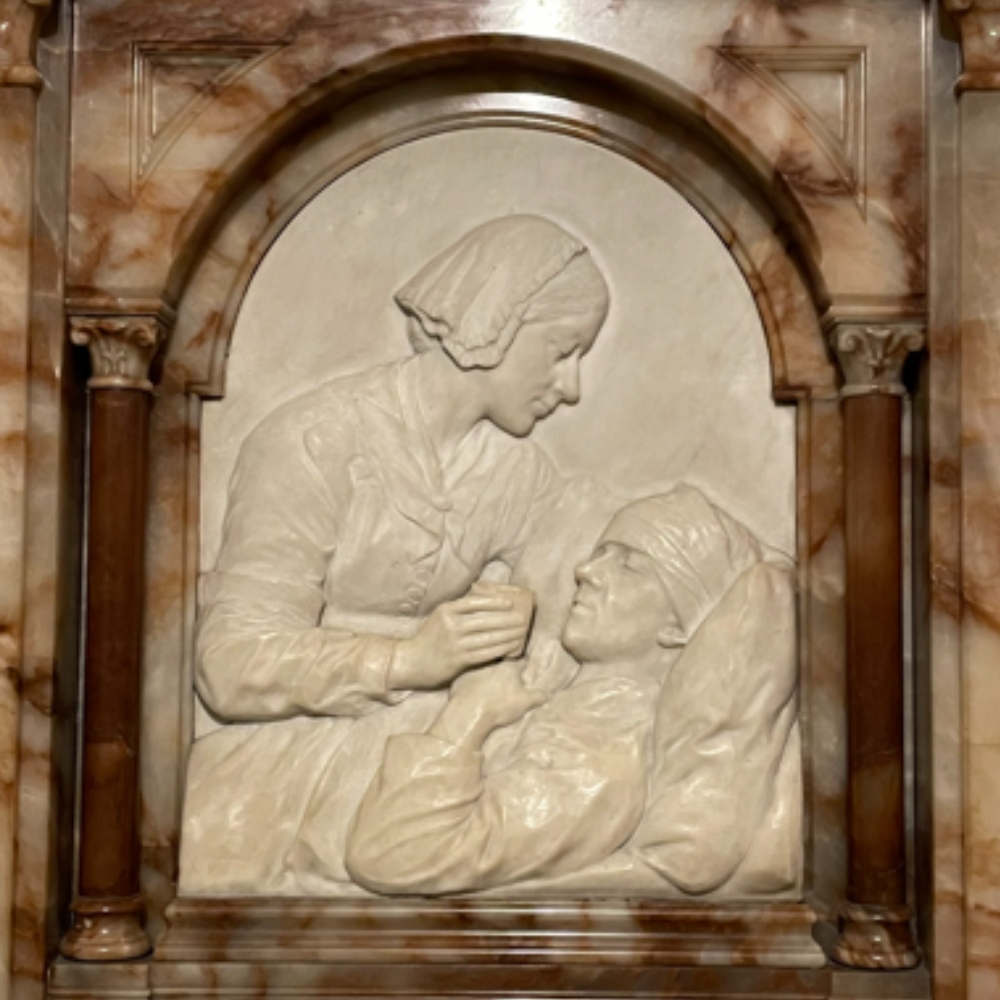
Florence Nightingale memorial in St Paul’s Cathedral
Near to Nelson’s final resting place in the crypt of St Paul’s, you will also find a memorial relief to Florence Nightingale. Although she is known for her work during the Crimean War of the 19th century, her heroism was not in battle, but in medical care for those wounded. She is celebrated as a pioneer of nursing, at a time when women were just barely tolerated in medical fields. She introduced many innovations, including better sanitation in hospitals and nursing homes, and use of what we would now call infographics: finding it hard to convey the complexity of medical needs and causes of death in her patients, she used pie charts and other visualisations to get across her points to those in power. You can find some of her hand-drawn “Nightingale rose diagrams” on display at the British Library.
As well as the memorial in St Paul’s, Nightingale also has a museum dedicated to her life and works, located inside St Thomas’s Hospital opposite Big Ben, and a statue at the corner of the Crimean War Memorial in St James’s, where she is shown holding her trademark oil lamp, which she used to light her way on night rounds of the war hospital, and which earned her the nickname “The Lady of the Lamp”.
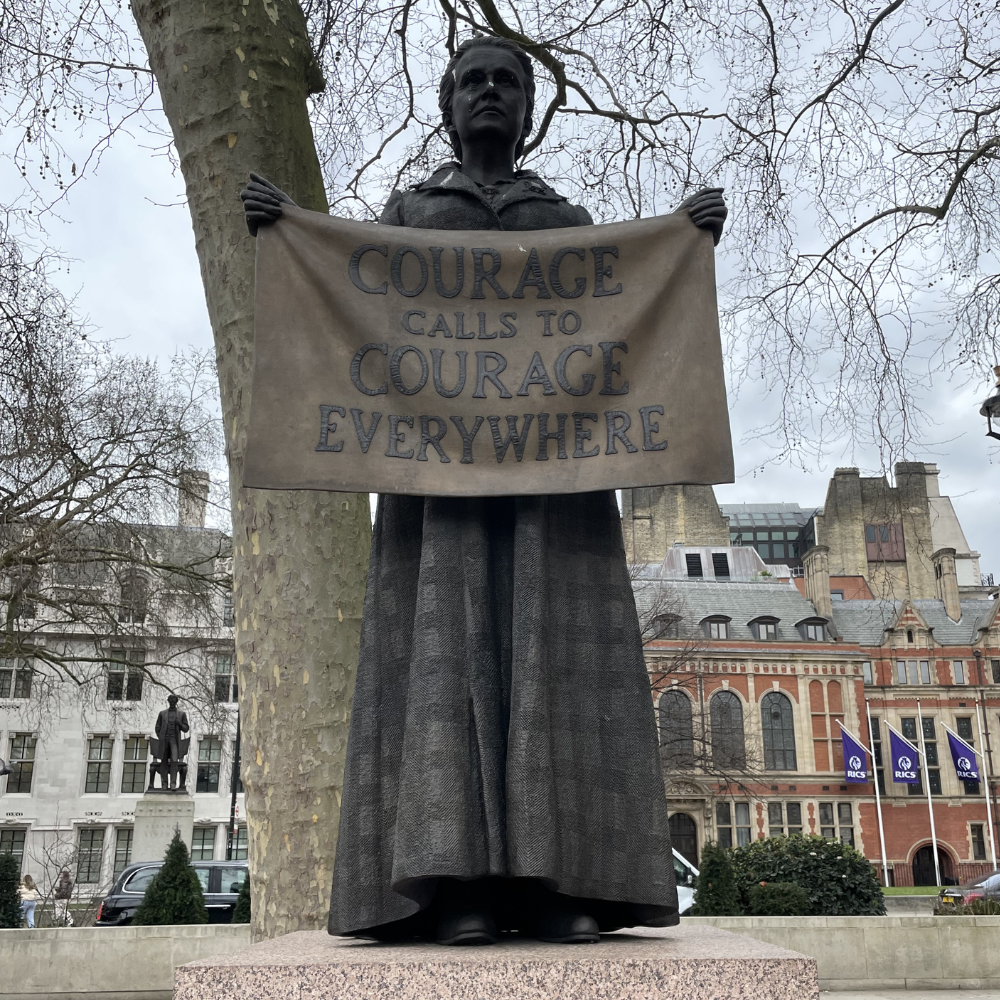
Millicent Garrett Fawcett and her rallying cry of ‘Courage calls to courage everywhere’
Florence Nightingale is a rare example of a woman to have a statue in London: the city has thousands of commemorative statues and busts in stone, wood, and metal, but the vast majority of them feature male subjects. The most famous collection of outdoor statues is probably those at Parliament Square, beside the Houses of Parliament, whose figures include Winston Churchill, Nelson Mandela, and Abraham Lincoln. However, until relatively recently there was no statue of a woman there, until in 2018 when the first female-made statue was unveiled: that of Millicent Garrett Fawcett, sculpted by Gillian Wearing.
Millicent Fawcett was born in 1847 into a family of high achievers – her sister Elizabeth Garrett Anderson was the first woman surgeon in Britain. Millicent was interested in politics, social issues, and women’s rights from an early age, and married the politician Henry Fawcett, which allowed her more access to the political system in Westminster. She campaigned for women’s right to vote, as part of the Suffragist movement, and was instrumental in the passing of the Representation of the People Act of 1918, which gave women of means over the age of 30 the right to vote in national elections.
The suffragist movement ran alongside the possibly more famous Suffragettes, who were the militant wing of the movement for universal voting rights. While Suffragettes like Emmeline Pankhurst and Emily Davison took direct and often violent action to bring attention to their cause, Fawcett and the Suffragists used more official channels of lobbying and influence to work towards the same aim. Both groups had their achievements, and around the plinth of Fawcett’s statue you will find images of 59 of the women, Suffragists and Suffragettes alike, who helped in the fight for women’s right to vote.
If you would like to explore these galleries, and the many others in London, contact me here to book a tour.